
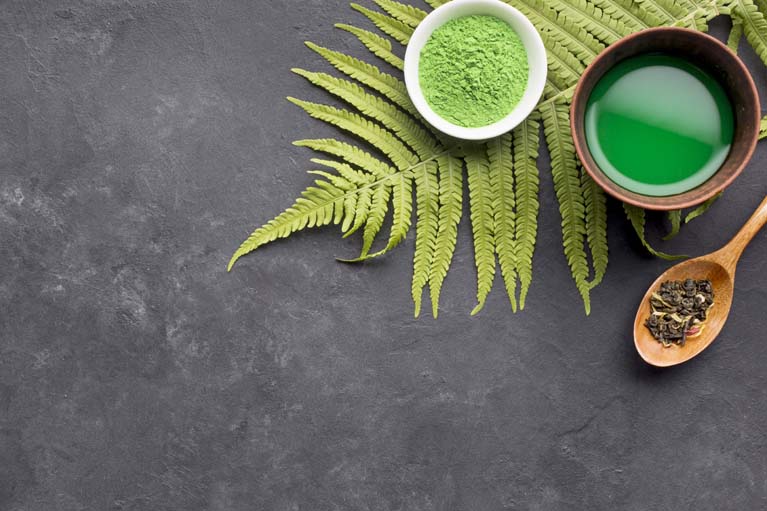
Mitragyna speciosa is a tropical evergreen tree in the coffee family, native to Southeast Asia, where its leaves have been used in regional traditional medicine for centuries. The plant is more commonly known as kratom. Over the last fifteen years, it has moved from regional traditional use to a global market driven primarily by online retail in the United States and parts of continental Europe.
The pharmacology is unusual. The leaves contain more than forty alkaloids, of which mitragynine and 7-hydroxymitragynine are the two best-characterised. Both interact with mu-opioid receptors in the central nervous system through a different binding profile than classical opioids. At low doses, the dominant effect is stimulant-like; at higher doses, the effect shifts toward sedation and analgesia.
The U.S. National Institute on Drug Abuse summarises the published research on these mechanisms and notes that the evidence base remains incomplete by the standards typically applied to medications.
Leaf, powder, and extract: why the form matters
Traditional use centres on whole-leaf preparations: chewed fresh, dried and powdered, or brewed as tea. The alkaloid concentration in dried leaf material is typically 1 to 2 percent by weight, with significant variation by region and harvest.
Kratom extract products concentrate the alkaloids by removing plant matter, producing material that is several times more potent by weight than the underlying leaf. Extract concentration ratios vary widely between products and producers, which is one of the reasons regulatory bodies have flagged the extract form specifically as a higher-risk preparation.
The U.S. Food and Drug Administration has issued multiple advisories on kratom since 2016, including warnings about contamination, inconsistent alkaloid content between batches, and lack of FDA approval for any therapeutic use. The Drug Enforcement Administration previously moved to schedule kratom as a controlled substance and did not finalise the scheduling, leaving the legal status determined by individual states. The U.K. position is different: mitragyna speciosa is captured under the Psychoactive Substances Act 2016, prohibiting production, supply, and importation for human consumption.
What the published research actually shows
Peer-reviewed work indexed on the U.S. National Library of Medicine documents documented effects in users including stimulant-type effects at low doses, opioid-type analgesia and sedation at higher doses, dependence with chronic use, and withdrawal symptoms on discontinuation that resemble mild opioid withdrawal.
Documented adverse events include hepatotoxicity in some chronic users, seizures in a small number of cases, and reported deaths in which kratom alkaloids were detected, often in combination with other substances.
The clinical literature does not yet support kratom or its extracts for any specific therapeutic indication.
Practical guidance for anyone considering use
Speak with a clinician before use, particularly with any liver disease, heart conditions, mental health conditions, current substance use disorders, or during pregnancy or breastfeeding.
Avoid combining with alcohol, opioids, benzodiazepines, or other central nervous system depressants.
Be aware that products in this market are not regulated for purity or alkaloid content, and that extract products in particular vary substantially in potency between brands and batches.
FAQ
Is kratom legal? Status varies by jurisdiction. U.S. federal status is unscheduled; some states have banned the substance. The U.K. prohibits supply under the PSA 2016.
Are extracts more potent than leaf? Yes. Extract products concentrate the active alkaloids and are typically several times more potent by weight.
Has the FDA approved kratom for any use? No.
Can kratom cause dependence? Yes. Published clinical literature documents dependence with chronic use and withdrawal on discontinuation.
This piece is for educational reference only.





+ There are no comments
Add yours